
9 min readOleksii Sribnyi
Questions to ask your grandparents
"Tell me about your childhood" usually gets a shrug and a few dates.
These 47 questions ask about one day, one place or one person, which is where the stories are.
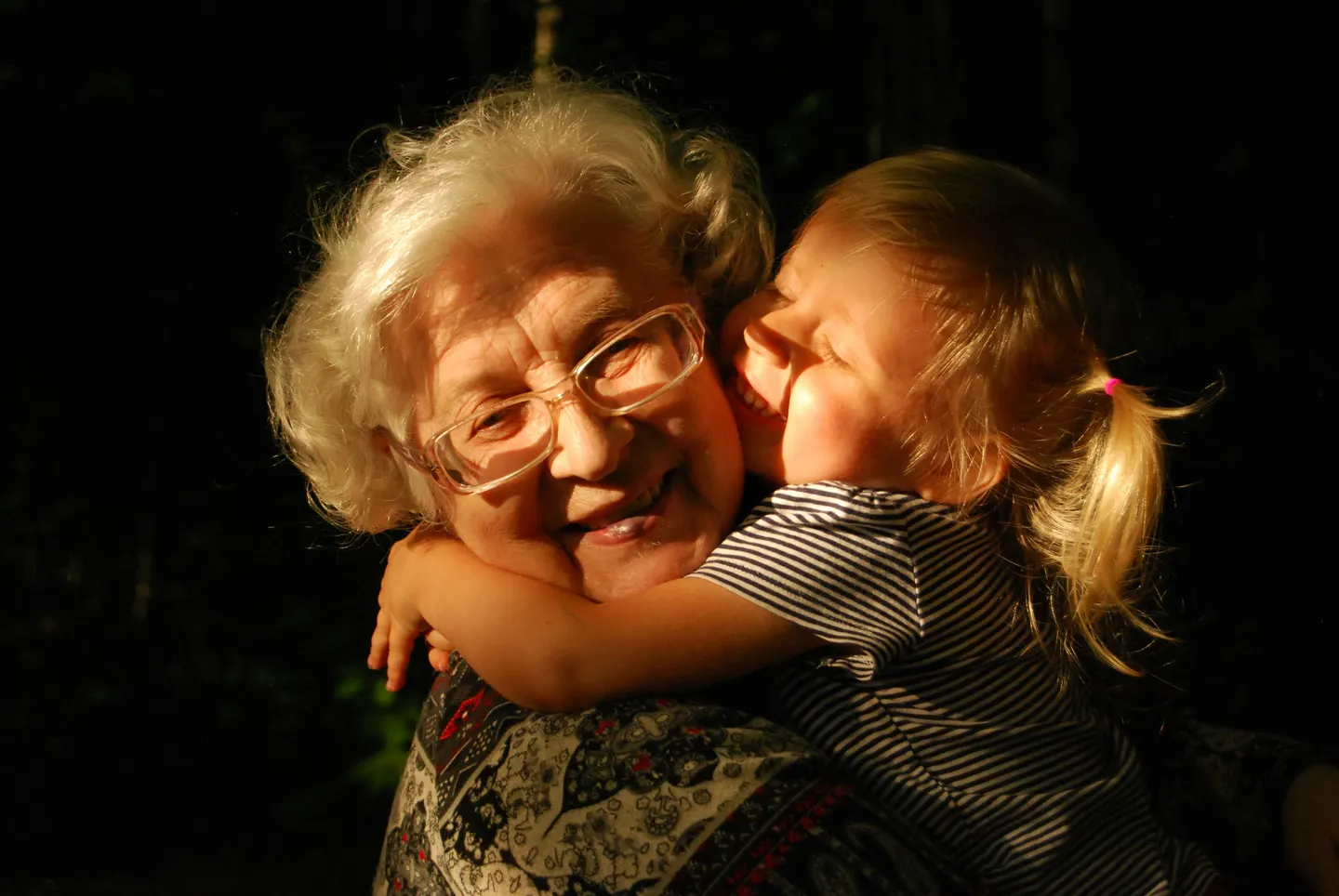
You ask your grandma about her childhood and get “oh, it was different then.” Big questions get short answers. Small, specific ones get stories.
The questions below go from easy to harder. Each has a line on why it works. Pick a few at a time.
Childhood and home
Start here. A house, a street and a smell are easy to picture, and they bring the rest back.
- 1
What did your house smell like on a Sunday?
A smell brings back a whole day: who cooked, who visited, what was on the radio.
- 2
Draw me your childhood home in words. What was through the front door?
Walking through the rooms one by one gets details a general question never does.
- 3
Who lived on your street, and which neighbour do you still think about?
Gets names and characters, which are the start of most good stories.
- 4
What games did you play outside, and when did you have to be home?
Rules and curfews say a lot about the family and the time.
- 5
What was a normal dinner, and what was a treat?
Food is concrete, and the treat usually comes with a story.
- 6
Which of your chores did you hate most?
Easy to answer and often funny. A good warm-up question.
- 7
What did you get in trouble for, and who caught you?
Everyone has one. It also shows who was in charge at home.
- 8
What did your parents do for a living, and what was a day like for them?
Fills in a generation the grandchildren never met.
School and first jobs
Teachers, friends and the first pay packet. These come with numbers and names.
- 9
How did you get to school, and how long did it take?
A walk, a bus or a bike ride sets the scene for everything else.
- 10
Which teacher do you remember, and why that one?
Almost everyone has one teacher who stuck, for good or bad reasons.
- 11
Who was your best friend at twelve, and what did you do together?
Friendships at that age come with places and adventures.
- 12
What did you want to be when you grew up?
Set it next to what they did. The gap between the two is often the story.
- 13
What was your first job, and what did it pay?
Ask for the number. It's the detail the family repeats for years.
- 14
What did you buy with your first wages?
Shows what mattered to them at that age, and what things cost.
- 15
When did you leave home, and what did you take with you?
A clear moment with a before and after.
Love and family
Many families have heard these stories in pieces, and never from start to finish.
- 16
How did you meet the person you married? Start with the day you first saw them.
Asking for the day gets a scene instead of a summary.
- 17
What did you do on your first date, and who paid?
Small and specific, which makes it easy to answer.
- 18
What happened at your wedding that wasn't in the photos?
The photos show the plan. This gets the rain, the late cousin and the speech.
- 19
Where was your first home together, and what was in it?
Furniture, rent and neighbours bring a whole period back.
- 20
What do you remember about the day your first child was born?
Most parents remember this day in detail, down to the weather.
- 21
What were my parents like as children?
Grandchildren love this one, and it often gets the funniest answers.
- 22
Which family tradition started with you?
Explains where a habit the family still keeps came from.
Hard times
Ask these later, once the easy stories are flowing. Let them skip any of them.
- 23
What was the hardest year of your life, and how did you get through it?
The second half matters most. It's where the advice comes from.
- 24
Was there a time money was really short? What did the family do?
Gets practical detail: what they went without, who helped.
- 25
Who did you lose too early, and what do you want us to know about them?
Keeps a person in the family story who might otherwise be a name on a list.
- 26
Was there a big decision you weren't sure about at the time?
Moves, job changes and leaving a country often come up here.
- 27
Who helped you when things went wrong?
Names the friends and relatives the family owes something to.
- 28
Is there anything you'd do differently?
Honest answers here are rare in writing and easier out loud.
Work and proudest moments
Most people spent forty years at work. Ask about the days, not the job titles.
- 29
Walk me through a normal workday at the job you had longest.
The commute, the lunch break and the people are more interesting than the title.
- 30
Who was the best boss you had, and the worst?
Two quick character sketches, usually with a story each.
- 31
What was something you made or fixed that you were proud of?
Gets a specific thing, not a general sense of pride.
- 32
Was there a day at work you'll never forget?
Accidents, promotions, a strike, a famous customer: anything can come up.
- 33
What skill did you have that nobody asks about anymore?
Typing, darning, fixing a carburettor. Often something nobody else in the family can do.
- 34
What are you proudest of, outside work?
Lets them name it themselves, which is often a surprise.
The world then and now
These compare their world with yours. They often lead to a long story about one year.
- 35
What did things cost when you were young? Bread, a bus fare, a cinema ticket.
Real prices make the past concrete for grandchildren.
- 36
When did your family get a telephone, a television and a car?
Each one comes with a first-day story.
- 37
What news do you remember hearing, and where were you when you heard it?
Ties the family to history through one room and one moment.
- 38
What music did you dance to, and where did you go to dance?
Easy and cheerful. You can play the songs back to them later.
- 39
What do you miss about how things used to be?
Gets their view, not a history lesson.
- 40
What's better now than when you were young?
The other side of the last question, and often a surprising answer.
- 41
What did people worry about back then that seems odd now?
A light way into what everyday life felt like.
Advice and what to remember
Keep these for last. By now the stories are flowing and the answers come easier.
- 42
What do you know now that you wish you'd known at 25?
Advice in their own words, which is the part families play again and again.
- 43
What's the best advice anyone gave you, and who gave it?
Passes on advice from a generation further back.
- 44
What makes a marriage or a friendship last?
They have decades of evidence. Ask for an example too.
- 45
Which recipe should the family never lose? Talk me through it.
A recipe told out loud keeps the pinches and the shortcuts a card leaves out.
- 46
What do you hope your grandchildren will be like as grown-ups?
Gives the grandchildren something to hear again when they're older.
- 47
What would you like your great-grandchildren to know about you?
Ends on what they choose to say about themselves.
How to ask
A list of fifty questions feels like homework. You get short answers and a tired grandparent.
- Ask one or two at a time. Two a week keeps it a chat.
- Start easy. A house, a street, a first job. Save hard times for later.
- Ask about one day. “Your wedding day” gets a story. “Married life” gets a summary.
- Follow the names. Every answer mentions a person or a place. Ask about that next.
- Say any question can be skipped. The hard ones feel safer.
Where did you grow up?
We moved to Preston when I was six, because Dad got work at the cotton mill. I shared a bed with my sister Joan until I was fourteen.
Next time, ask
- What do you remember about the move to Preston?
- What did your dad do at the mill?
- What was Joan like as a girl?
Keep their own voice
Notes from a phone call keep the facts and lose the voice. Years later, the voice is what you miss.
With a SendMyVoice voice form, you send your questions as a link. Answering takes a phone and a tap on record, with no app and no account. You keep every story as a recording with a transcript.
Grandma Rose
Story 3 of 5 · answered Sunday
What did your house smell like on a Sunday?
Roast lamb and coal smoke. Mum put the joint in before church and we could smell it from the end of the street walking home. Dad carved, and we all fought over the crispy potatoes.
Each grandparent can get their own link, so every story comes in under the right name. You can download all the recordings at once, and the transcripts as a spreadsheet.
Free and Pro
The free plan gives you 1 form, 3 questions, answers up to 1 minute and 10 answers a month. A good story often runs longer. Pro is $6 a month: 20 questions, answers up to 5 minutes and 200 answers a month.
SendMyVoice doesn't print books. You can use the transcripts in any photo book later.
The family stories template has five questions from this list ready to send.
Step 1 of 5
Where did you grow up, and what was your street like?
Tap to record. Up to 2 min.
Start from a template
Family stories
Questions for a parent or grandparent, answered in their own voice.
- 1Where did you grow up, and what was your street like?
- 2What was your first job, and what did it pay?
- 3How did you meet the person you married?
Birthday voice messages
Voice messages from friends and family, played on the birthday.
- 1Your name, and how you know Maya
- 2Your birthday message for Maya
- 3A favourite memory with Maya
Podcast listener questions
Questions and stories from listeners, recorded from a link in your show notes.
- 1Your first name, and where you're listening from
- 2What's your question for the show?
- 3Is there a story behind it?
Questions
What questions should I ask my grandparents?
Start with easy, specific questions about their childhood home, school and first job. Move on to love, work and hard times, and finish by asking what they want the family to remember.
How do I get my grandparents to talk about their past?
Ask about one day or one place, not a whole period of life. Then follow up on the names and places they mention. Two questions at a time is plenty.
What's the difference between family history and oral history questions?
Family history questions collect facts: names, dates, places. Oral history questions ask for stories and opinions in the person's own words. A good interview mixes both.
How do I record my grandparents' stories?
You can sit with them and use a voice memo app, or send a SendMyVoice voice form. A voice form is answered out loud on a phone, and you get each story as a recording with a transcript.
How long should each answer be?
Most good stories take one to five minutes. SendMyVoice allows answers up to 1 minute on the free plan and up to 5 minutes on Pro.
Can I turn the answers into a book?
SendMyVoice doesn't print books. You can download every recording in one zip file and every transcript as a spreadsheet, then use them in any photo book or memoir.
Record their stories in their own voice
Free plan, no credit card. No account to answer.